
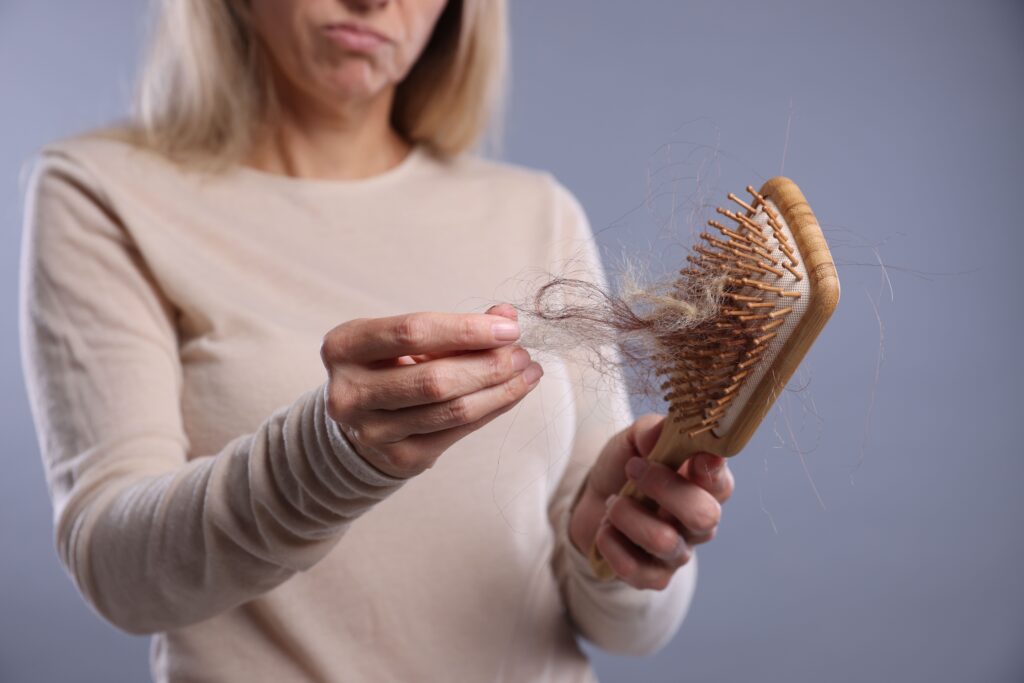
Hair loss after 50 is more common than many women realize. Hormonal changes, genetics, stress, and nutritional shifts can all play a role in thinning hair during midlife. But beyond the physical changes, hair loss can also affect confidence and emotional wellbeing. The good news is that there are real solutions—from nutrition and medical treatments to simple lifestyle changes that can support healthier hair growth.
Many women notice subtle changes in their hair sometime in their 40s or 50s. Maybe your ponytail feels thinner than it used to. Maybe you notice more strands in the shower drain. Or perhaps your once-full part line has started to widen.
For many women, this moment can be surprisingly emotional.
Hair has always been more than just hair. It’s part of how we see ourselves. It’s tied to youth, femininity, and identity. When it begins to thin, it can feel like something important is slipping away.
If this is happening to you, it’s important to know one thing right away: you are not alone.
Hair thinning is incredibly common during midlife, and it happens to millions of women. It’s also something that often goes unspoken, leaving many women feeling isolated or confused about why it’s happening.
The truth is that hair loss after 50 is usually the result of very normal biological changes.
The Emotional Side of Hair Loss
Hair loss isn’t just physical. For many women, it can have a real emotional impact.
You might notice yourself feeling:
- Less confident about your appearance
- Frustrated or discouraged when styling your hair
- Self-conscious in photos or social settings
- Worried that you’re “aging overnight”
These feelings are completely valid.
Hair is deeply connected to self-image, and when it changes, it can bring up a mix of emotions. Some women even describe it as a quiet form of grief.
But there’s another side to this story too. Once women begin to understand what’s happening—and what they can do about it—they often feel a renewed sense of control.
Why Hair Loss Happens After 50
Hair thinning during midlife usually has several causes working together.
Understanding these factors can make the experience feel far less mysterious—and much more manageable.
Hormonal Changes During Menopause
One of the biggest contributors to hair thinning is menopause.
As estrogen and progesterone levels decline, hair tends to grow more slowly and spend less time in the growth phase. At the same time, hair follicles may become more sensitive to androgens, which can cause them to gradually shrink.
The result is often:
- Thinner strands
- Reduced volume
- Slower regrowth
- A widening part line
For many women, this process happens gradually over several years.
Genetics
Sometimes hair loss simply runs in the family.
If your mother or grandmother experienced thinning hair later in life, there’s a chance genetics may play a role in your own hair changes.
This condition, known as female pattern hair loss, typically appears as diffuse thinning across the crown of the head rather than a receding hairline.
Nutritional Changes
Hair follicles are surprisingly sensitive to nutrition.
Deficiencies in certain nutrients can affect the hair growth cycle, including:
- Iron
- Vitamin D
- B vitamins
- Zinc
- Protein
As we age, our bodies may absorb nutrients differently, which means even small deficiencies can sometimes show up in the health of our hair.
Stress and Major Life Changes
Midlife can be a time of enormous transition.
Many women are juggling careers, caring for aging parents, navigating empty nests, or managing major life shifts. Stress can push more hairs into the shedding phase, a condition known as telogen effluvium.
The good news is that this type of hair loss is often temporary once the body returns to balance.
Health Conditions or Medications
Certain medical conditions that become more common after midlife can also affect hair growth.
These include thyroid disorders, autoimmune conditions, and hormonal imbalances. Some medications may also contribute to shedding.
If hair loss appears suddenly or seems severe, it’s always worth discussing with a healthcare provider.
What You Can Do About Hair Loss
If you’re experiencing hair thinning, it may feel discouraging—but there are more solutions available today than ever before.
The key is approaching hair health from multiple angles.
Start With Nutrition
Healthy hair starts from within.
A diet that supports hair growth typically includes:
- Protein-rich foods like eggs, fish, and legumes
- Leafy greens and iron-rich vegetables
- Healthy fats such as nuts and seeds
- Omega-3 fatty acids
If deficiencies are suspected, a doctor may recommend targeted supplements.
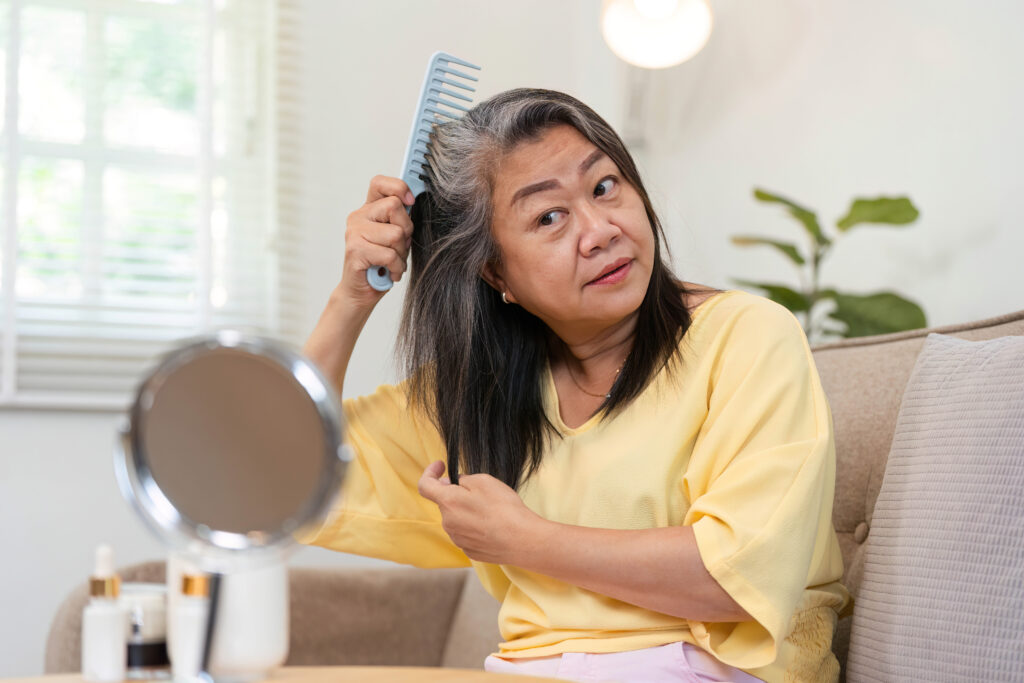
Be Gentle With Your Hair
Hair often becomes more fragile with age, so treating it gently can make a noticeable difference.
Helpful habits include:
- Reducing heat styling
- Using mild shampoos and conditioners
- Avoiding tight hairstyles that pull on the scalp
- Limiting harsh chemical treatments
Small changes in hair care can help protect the hair you have.
Consider Medical Treatments
There are several scientifically supported treatments that can help slow hair thinning or encourage regrowth.
These may include:
- topical treatments designed to stimulate hair follicles
- prescription medications
- low-level laser therapy devices
- platelet-rich plasma treatments offered by dermatologists
A dermatologist can help determine which options might work best for your situation.
Support Your Nervous System
Hair health is closely tied to overall wellbeing.
Practices that reduce stress can help support the body’s natural hair growth cycle, including:
- daily walks
- gentle exercise like yoga
- time outdoors
- meditation or breathing practices
- prioritizing sleep
These habits support not only hair health, but overall vitality during midlife.
Explore Styling Solutions
While treatments take time, a few styling strategies can immediately help hair appear fuller.
Many women find success with:
- layered or textured haircuts
- subtle highlights that create dimension
- volumizing products
- lightweight hair toppers
- good quality wigs
Modern options are often incredibly natural-looking. There are synthetic, affordable wigs that look and feel like natural hair. There are also human hair wigs that, although, more expensive, last longer and are more versatile than synthetic wigs.
A Different Way to Think About Hair in Midlife
Hair changes are one of many shifts that come with this stage of life.
But they can also become an invitation to approach self-care differently. Many women find that once they begin supporting their bodies—through nutrition, rest, stress reduction, and medical guidance—their overall wellbeing improves along with their hair health.
Midlife may bring changes, but it can also bring a deeper understanding of what your body truly needs to thrive.
Final Thoughts
If your hair has started thinning after 50, it can feel unsettling at first. But it’s far more common than most people realize.
With the right information, support, and care, many women are able to slow hair loss and even encourage regrowth.
Most importantly, remember that hair is only one part of who you are. Confidence, vitality, wisdom, and resilience tend to grow stronger with age—and those qualities never thin.